
Shoofni guide
How to write a CV for your first job in Egypt
A one-page CV that gets read: what to put on it, how to show your skills with no experience, and what to leave out.
The Shoofni team ·
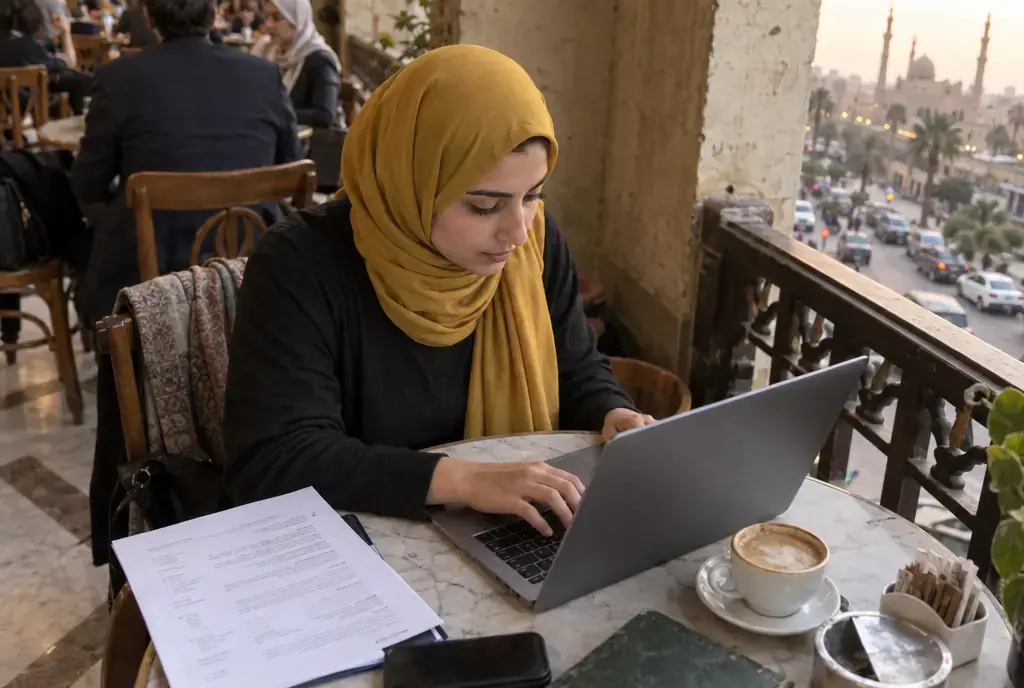
A CV for your first job is one page that says who you are, what you can do and how to reach you. You do not need long experience to write a good one: you need to be clear, honest and tidy. This guide walks through what to put on the page, in what order, and what to leave out.
Keep it to one page
A hiring manager reads many CVs a day, often on a phone. One clean page gets read, while three crowded pages get skipped. Use a plain font at a readable size, leave space between sections, and save the file as a PDF so it looks the same on every screen.
- One page, no more
- A plain font that is easy to read on a phone
- Short sections with clear headings
- A PDF with your name in the file name
Start with your details
At the top, put your full name, the mobile number you really answer, your email and your governorate and area. Use an email that looks serious, built from your name rather than a nickname, and check every digit of your number, because a wrong digit is a missed call you never hear about. Add a small, clear photo only if the job asks for one.
Write two lines about yourself
Under your details, add two lines that say who you are and what you want. A line such as: recent business graduate looking for a customer service role, comfortable in Arabic and English, quick on chat and on the phone. It tells a reader in five seconds what you offer. Write it for the role you want, and change a few words for each role you try.
Show your education
List your highest education first: the degree or diploma, the school or university, and the year you finished or will finish. Add one line on something that fits the role, such as a project, a course or a subject you did well in. If you are still studying, say so and write the expected year.
Show your skills when you have no experience
No experience does not mean nothing to show. Think about what you have done in school, in volunteering, in a family shop, in a student club or online, and write it down as something you did.
- Languages, with your honest level in each
- Computer skills: Word, Excel, email and the social platforms you know
- Typing, if you know how fast and how accurately you type
- Volunteering, student clubs and projects, with your part in them
- Helping in a family business, with what you actually did
Describe what you did, not what you are. Handled the cash and answered customers' questions at my family's shop on weekends is stronger than hard worker, because a reader can picture it.
If you have worked before
List jobs from the newest to the oldest: the job title, the company, the dates, and two or three lines on what you did. Use numbers when you honestly have them, such as how many customers you served in a shift or how many posts you scheduled in a week, and leave them out when you do not. A short job done well is worth listing.
Check it before you send it
Most CVs lose a reader on a small mistake. Before you send yours, read it aloud, check every date and number, and ask a friend whether anything is unclear.
- Fix every typo in Arabic and in English
- Make sure your phone number and email are right
- Use the language the role asks for: Arabic for Arabic roles, English where English is needed
- Keep every line true, because a company may ask you about it
No CV yet?
If you do not have a CV yet, you can still sign up with Shoofni: write up to three lines of work history instead, each with a role, an employer and the years. And if you already have a printed CV, a photo of it is accepted, so you can sign up today and improve your CV for the next application.
A first CV does not have to be impressive. It has to be easy to read, true and yours, and every strong CV started as a first one.